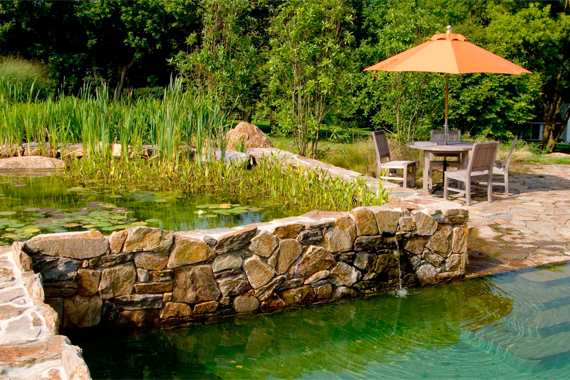
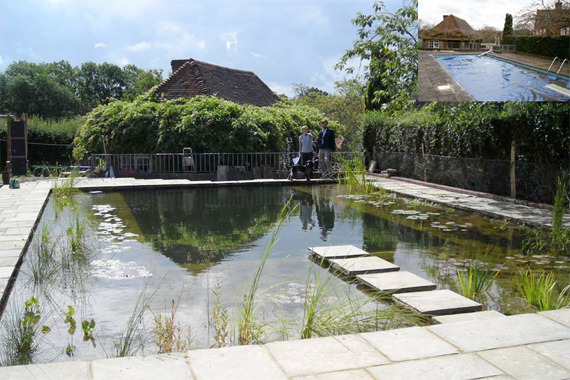
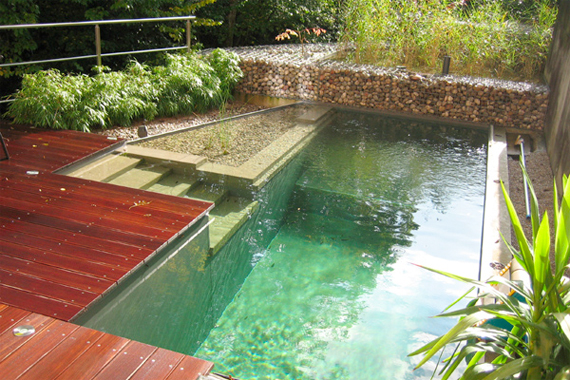
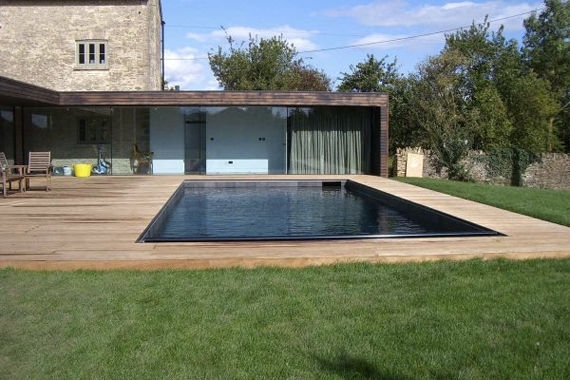
"Natural swimming pools use plants or a combination of plants and sand filters to keep the water clean and clear without chemicals. They were developed in Austria and Germany in the 1980s and have since grown in popularity worldwide. They can be designed in a multitude of ways: Some look like natural ponds; others may be disguised as standard tiled pools." -- Houzz.com
The Center for Land Use Interpretation Occupying a bleached-out building on a busy street and marked only by a small logo, the Center for Land Use Interpretation (CLUI) has spent nearly 20 years redefining geography, and inviting the public to join them. This isn’t about mapping roads and elevations, but looking at more unconventional aspects of the land, from satellite dishes scanning the skies to hidden networks of oil extraction in our own neighbourhoods. CLUI cracks geography open to reveal its fascinating links to culture and history, and has made it an urgent, compelling subject attracting entirely new audiences….ICON MAGAZINE ONLINE | Centre for Land Use Interpretation: Being There by Lyra Kilston
Natural pools use one of two types of biological filters to create water that’s clear, clean, and chemical-free. Water is circulated by pump through either a gravel filter or a plant filter, depending on your preferences and, to some degree, your climate (gravel filters are better in warmer climates). Maintenance is easy: Once a month, remove any loose sediment with a pool vacuum cleaner.
You can build a natural swimming pool that’s a dead ringer for aregular pool, complete with concrete sides and bottom, and a traditional sky-blue pool color. You can even substitute an out-of-sight gravel filter for the plant pond.
Sterilized soil is good for the plant pond, but for the swimming pool, you can use concrete, a synthetic or rubber liner, or bentonite clay. At about 35 cents per sq. ft. (not installed), a 3-inch-thick layer of waterproof bentonite is the cheaper option. Adding 3 to 4 inches of pre-washed gravel to the bottom of your plant pond provides a habitat for beneficial bacteria that biodegrade any organic materials.
Any animals attracted to your natural swimming hole, such as dragonflies and frogs, keep to the plant side of the system, which is their natural habitat. And yes, you want them: They eat mosquitoes and their larvae, keeping your backyard free of biting pests.
Most natural swimming pools feature two connected pools — one for swimming, and a shallow pool to hold plants. The root structures of aquatic plants — cattails, water lilies, and duckweed — remove bacteria and other contaminants. Check your state extension service for localized water plants.